Students for Harm Reduction
Join our new campus club/ Action Group – Students for Harm Reduction!
Formed in 2026 – if you are a student, staff, or faculty interested in Harm Reduction education and solidarity work at Brock and across Niagara!
Currently, there are 3 volunteers you can volunteer with:
- Communications Team – Social media and promotion
- Letter Writing Team – Reviewing the CTS solidarity letters that have been written so far and making a plan for getting them converted into templates.
- Team Meeting & event planning – Scheduling and logistics planning around a future letter writing event and team meetings.
If you would like to get involved in Students for Harm Reduction or would like updates about the event, please send an email to info@opirgbrock.com or call/message (SMS/Signal) – 365-855-2768.
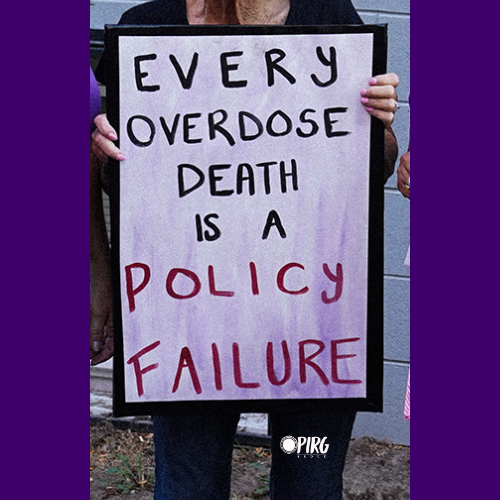
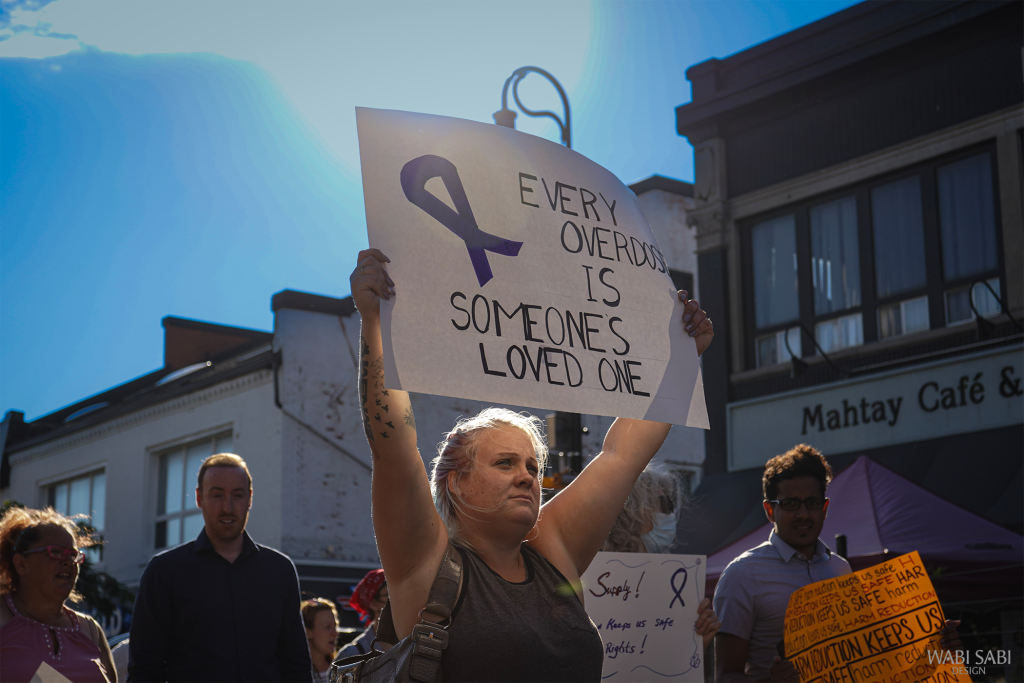
International Overdose Awareness Day
Harm Reduction & Naloxone at Brock program
“OPIRG dedicates countless hours to training, mentoring and supervising our students in placements that focus on educating students in harm reduction including naloxone training. This training is not only foundational training for public health, it saves lives.”– Pauli Gardner, PhD (they/them) Associate Brock Professor, Public Health & Gerontology
OPIRG Brock Harm Reduction placement program with HLSC 4P40 in the focus on Public Health, and in partnership with Positive Living Niagara.
Since 2018, OPIRG Brock has had the great privilege of working with faculty and students in the Public Health 4P40 course. Within this program, placement students have the opportunity to gain education in harm reduction, Naloxone/ narcan, and addiction services, as well as working on event & campaign planning, web & graphic design, policy development, campus advocacy, and partnership development.
Through this program we have seen amazing expansion of harm reduction options at Brock, and are continually working to expand this work in the semesters ahead!
Materials
Why care about Harm Reduction at Brock? Poster
Free Harm Reduction Resources Poster
Myths and Facts about Harm Reduction! Poster
What to do if you find a needle on campus or in public? Poster
Incorporating Naloxone & harm reduction into your activism Handout
OPIRG Brock Supports Needle and Syringe Programs Public statement
Harm Reduction FAQ
What is harm reduction?
Harm Reduction is a framework that focuses on developing programs and policies to reduce the risks associated with substance use.These associated harms include infection, disease or death. By implementing these programs and services it promotes healthy populations.
“Harm reduction is a set of practical strategies and ideas aimed at reducing negative consequences associated with drug use. Harm Reduction is also a movement for social justice built on a belief in, and respect for, the rights of people who use drugs.” (Source: PRINCIPLES OF HARM REDUCTION, Harm Reduction Coalition)
Most commonly, harm reduction is associated with folks who use substances, and while this is common, all people practice harm reduction in multiple ways every day. Seat belts are a good example – we know driving comes with a level of risk, and so we use seat belts to help minimize the danger associated with driving.
Why should I care about harm reduction?
All Brock students, staff, faculty and community members practice in Harm Reduction everyday (e.g., seatbelts, coffee shops, substances, etc.,). In 2019, it was reported that 57% of Brock students used substance daily. Increased access to harm reduction info will help reduce stigma for these students. (Source: Reported marijuana use ‘higher’ at Canadian universities in 2019: Survey, Maclean’s).
Across the Niagara region, there is an increasing rate of opioid overdoses every year, which means our community needs harm reduction approaches to support them every day.
What is available for students at Brock University who use substances?
Sharps containers are located in almost all washrooms around the campus (main and downtown) for students who ned to dispose of these items.
Personal counselling services are available for all Brock students through Student health and Wellness.
What is available in Niagara for folks who use substances?
See the column to the right for services and organizations in Niagara working on these issues!
Don’t harm reduction services enable drug use in our communities?
The availability of Harm reduction programs does not cause people to begin using substances.
Also, a lack of services does not mean there is a lack of demand. People who always use substances, and harm reduction based programs allow for access to new supplies and locations where the chance of death caused by overdosing is significantly reduced or other health risks are significantly reduced.
How does harm reduction relate to mutual aid?
Dean Spade, a trans activist, writer and academic, defines mutual aid as “a form of political participation in which people take responsibility for caring for one another and changing political conditions not just through symbolic acts or putting pressure on representatives, but by actually building new social relations that are more survivable.”
Keeping this definition in mind, harm reduction is also a part of mutual aid. Community partners like OPIRG Brock, Positive Living Niagara and many more organizations that are available in the community, all aim to support the people. These community organizations always aim for caring for those people who are in need. And therefore, harm reduction is linked to mutual aid.
What is available at Brock University for students who care about harm reduction?
For Public Health Students
These two courses provide education regarding Harm reduction and stigma around it:
HLSC 4P40: Public Health Capstones by Dr. Anthony Chum
HLSC 3P25: Mental Health and Addictions by Dr. Pauli Gardner
HLSC 4P40 offers practicum placements with the community partners like OPIRG Brock and Positive Living Niagara, where individuals could get more information and hand-on experience towards harm reduction.
For general Brock population
For all the Brock students, staff and faculty members; The Hub located in Marketplace provides Narcan/Naloxone Training from Positive Living Niagara. The training is offered once every month and interested individuals can register through Experience BU.
All Brock students have access to resources, events, and workshops offered available through OPIRG Brock.
What about all of the needles in the parks – aren’t those an issue for the general population’s safety?
Needle stick injuries from sharps left in public are rare, and transmission of disease from such injuries are even more rare. In such extreme cases, Post Exposure Prophylaxis (PEP) is a readily available healthcare measure that can neutralize long term harm to an individual. In contrast, HIV and Hep C from lack of new harm reduction supplies can cause widespread suffering, death, and undue burden on the healthcare system. While needles found in public are unsightly and should be minimized.
This perspective on ham reduction supplies, specifically needles left in public, are a lightning rod for fearmongering, NIMBYism, and dehumanizing, stigmatizing attacks on people who are homeless, people who use drugs, and the vital services they rely on. While we would love to live in a city without litter, we care more about the health and wellbeing of the most vulnerable people in the community. Sadly, the stigma surrounding sharps (needles)* in public often boils down to people being afraid of others who use drugs, and not wanting a visual reminder that we live in a society with such devastating poverty and alienation.
How do I dispose of a needle I find in public?
There are a variety of reasons you might find a needle in public, & there is a very easy & safe way for you to dispose of it!
- Find a container that is safe for sharps. This would be ideally be a sharps container, but if you don’t have one, any container that is resealable, puncture-proof, and is made of thick plastic/ metal (e.g. coffee can, water bottle, etc.).
- Safely pick up the needle. You can do this using tongs or gloves, or only grabbing the barrel of the needle. Never grab it by the tip or try to recap the needle.
- Put the needle TIP DOWN into the container. Make sure you cannot prick yourself in this process.
- Label the container with marker if not already labelled.
- Bring the container to a safe disposal site & their staff can permanently dispose of it. Positive Living Niagara (120 Queenston St., St Catharines) is one of our key disposal sites. There are also many public disposal containers in locations like public washrooms. Advocating for more disposal bins in the region will help with the ease of disposing of needles when you find them.
Pro-tip – You can also support those impacted by the stigma around needing to use needles by sharing these steps with your communities and by getting trained in harm reduction & Naloxone. To get trained and get a Naloxone kit, please email claurie@positivelivingniagara.com.
I hear that Niagara is part of the ‘opioid epidemic/ crisis’ – what does that mean?
“Illegal drugs and problematic drug or substance use are not new in Canada. However, the opioid crisis has brought to light the devastating effects opioids are having on individuals, families and communities across Canada. Since 2016, there have been more than 9,000 apparent opioid related deaths. In 2017, approximately 11 lives were lost each day because of opioid overdoses. Many others have been hospitalized because of an opioid overdose.” (Source: www.canada.ca/en/health-canada/services/publications/healthy-living/canada-opioid-crisis-fact-sheet.html)
Resource Sheet: Canada’s Opioid Crisis
“From January to November 2021, there were 926 suspected opioid overdoses that have been responded to by EMS. This is approximately 84 responses per month.” (Source: Opioid Usage – Statistics in Niagara (Niagara Region) )
“Niagara continues to rank near the top of a list it doesn’t want to be on, at all. “In terms of number of opioid overdose deaths from June 2020 to May 2021, we appear to be the second in the province based on hard numbers,” said Talia Storm, director of Positive Living Niagara’s StreetWorks Harm Reduction Services.” (Source: ‘Terrifying’ statistics continue for Niagara opioid crisis, St. Catharines Standard, Oct 2021)
Pro-tip – You can also support those impacted by the stigma around needing to use needles by sharing these steps with your communities and by getting trained in harm reduction & Naloxone. To get trained and get a Naloxone kit, please email claurie@positivelivingniagara.com.
In addition to getting trained in Naloxone/Narcan, what else can I do to help?
- Get trained in harm reduction and Naloxone
- Carry a naloxone kit (pro-tip: wear a button that says “I carry Naloxone”)
- Ask if your workplace has harm reduction built into their health and safety policies & if not, advocate that they be added
- Set up a harm reduction and Naloxone training at your workplace, volunteering locations, and community groups
- Ask businesses you frequent if they have Naloxone onsite and if staff are trained in harm reduction and Naloxone
- Challenge friends, family, and classmates when they use stereotyping language and/or perpetuate stigma
- Collect sharps with friends around community and put them in a sharps container
- Volunteer with Positive Living Niagara
Additional Resources
- Big Door Brigade
- Harm Reduction Coalition
- Indigenous Harm Reduction Team Resources
- Indigenous Harm Reduction Network GoFundMe
- Opioid Overdose Crisis in Niagara 2020 Radio Interviews, Newstalk 610 CKTB
- Overdose Prevention & Harm Reduction: Support Others, First Nations Health Authority
- Toronto Indigenous Harm Reduction
Community Services & Resources

Positive Living Niagara (PLN) is a non-profit organization based in St. Catharines. PLN provides resources and information to reduce risk of HIV and Hepatitis C.
Website | Email
StreetWorks Harm Reduction Program is operated by Positive Living Niagara, and serves the Niagara Region. They offer safer substance use supplies, harm reduction information, community cleanups, peer programming, testing, narcan, and more!
Website | Email
Positive Living Niagara Mobile Delivery Van
For delivery in: St. Catharines, Niagara Falls, Fort Erie, Crystal Beach & Ridgeway
Call: 905-328-6715
For delivery in: Welland, Port Colborne, Grimsby, Beamsville & Fonthill
Call: 905-380-2365
Hours of Operation:
Monday-Friday 6PM-10:30PM
Supplies Available
- Nasal and Injectable Narcan
- Intravenous and Intramuscular Needles
- Inhalation supplies
- Sharps containers
- Hygiene supplies
- External and internal condoms
- Dental dams
NAMES
A group of parents, family members and those in our community from the Niagara Region and beyond who have lost loved ones to, or are coping with substance use disorder.
Website | Email